


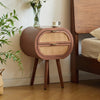


Solid Wood Bedside Tables
Not all wooden bedside tables are created equal: between a veneered piece and one made from solid wood, the difference may be subtle in photographs, but you feel it every single day. The thickness of the tops, the quality of the joinery, the stability, the authentic grain — solid wood is a choice for longevity as much as for style. This page will help you understand what truly sets a solid wood bedside table apart, recognise a well-crafted piece, and decide whether this level of quality is right for your bedroom and your priorities.
Why choose a solid wood bedside table?
Solid wood is not simply a selling point on a product sheet: it changes the sturdiness of the piece, the way it feels to the touch, and its ability to stand the test of time.
Choosing a robust material for lasting everyday use
A bedside table is handled every day: the drawer opened and closed, objects set down without much care, a lamp moved, a glass of water left overnight. Solid wood withstands this real-life use far better than thin panels. Its density gives it a natural stability, its surfaces scratch less easily and, above all, they can be restored: a light sanding and a coat of oil are often enough to erase the marks of time. That is the whole logic of a well-built piece of furniture: rather than replacing it, you maintain it. Over ten or fifteen years, the difference in longevity is very real.
Bringing depth and authenticity to the bedroom
Solid wood is also recognisable to the eye. The grain runs through the material itself, with its natural variations: no two bedside tables are exactly alike. This authenticity adds depth to the sleeping corner, where a printed finish remains uniform. In a bedroom with soft tones, a solid oak or pine bedside table becomes a quiet yet perceptible anchor point, one that develops a beautiful patina over the years rather than deteriorating.
How do you recognise a sturdy, well-designed bedside table?
A few simple checks are all it takes to tell a truly durable piece from one that merely looks the part.
Looking at thickness, joinery and finishes
Start by looking at the thickness of the tops and sides: quality solid wood features clean, substantial sections with no veneered edges that would betray a panel construction. Then examine the joinery: neat connections with no play or visible gaps are the hallmark of serious craftsmanship. Finally, the finish should protect the wood while still allowing you to feel its character: a quality oil or matte varnish enhances the grain and makes maintenance easier, whereas a thick, glossy finish often conceals flaws.
Checking stability and storage capacity
A good bedside table should not tip when you open the drawer or lean on it to get up. Place your hand on a corner: the piece should remain perfectly stable. On the storage side, check that the drawer slides smoothly without forcing and that its capacity suits your evening routine: glasses, a notebook, a charger, small items. An additional open shelf is a welcome bonus for books. The quality of a piece of furniture is judged as much by these everyday details as by its material. Finally, bear in mind the weight: a solid wood bedside table is heavier than a panel-based model, which contributes to its stability but is worth considering if you rearrange your bedroom frequently.
In which bedrooms does solid wood work best?
Solid wood fits in anywhere, but it truly comes into its own in certain settings. In a bedroom with Scandinavian or natural inspiration, it works beautifully alongside linen textiles, light-coloured walls and raw materials; a solid oak bedside table finds its place there immediately. In a family bedroom or one that sees heavy use, its robustness becomes the main argument: this is the piece you never worry about opening a hundred times. It also pairs very well with lighter elements: combined with a rattan bedside table on the other side of the bed, it creates a natural, lively sleeping corner without rigid symmetry. The only real limitation is very small bedrooms, where floor space counts double. In that case, a wall-mounted bedside table may be a better compromise, or a headboard with storage that moves the shelving to the wall behind the bed, reserving solid wood for the chest of drawers instead.
Nordlys solid wood bedside tables: durability, style and real everyday use
At Nordlys, the solid wood bedside table is designed as a piece you keep: generously thick tops, carefully controlled joinery, natural finishes that protect the wood without concealing its grain, and storage sized for genuine everyday use. The lines remain clean, in a Scandinavian spirit that makes it easy to achieve harmony with the rest of the bedroom: a wooden headboard in a similar tone is all it takes to create a cohesive look, and for a larger bed, a 160 wooden headboard naturally frames two matching solid wood bedside tables. Before making your choice, measure the height of your mattress, the available space on each side of the bed, and the storage you genuinely need. If you are still deciding between styles, our full range of bedside tables lets you compare sizes and materials at a glance. Solid wood, for its part, remains the choice of those who prefer to buy once, well, and for the long term.


